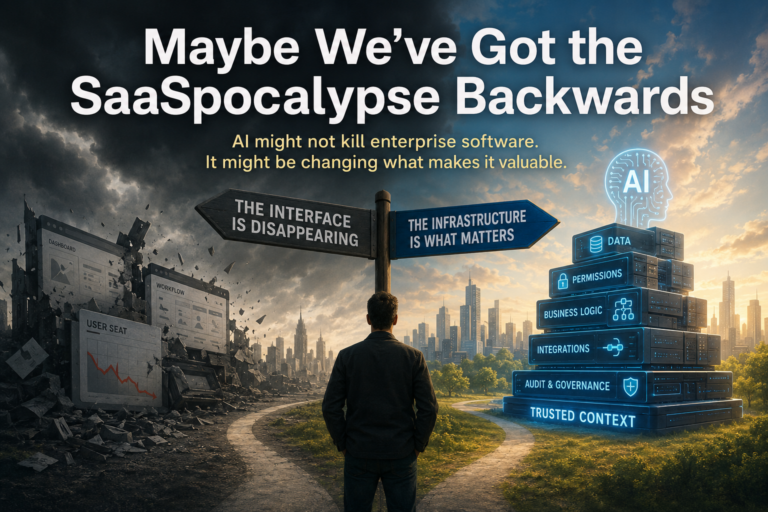
What If We’ve Got the SaaSpocalypse Backwards?
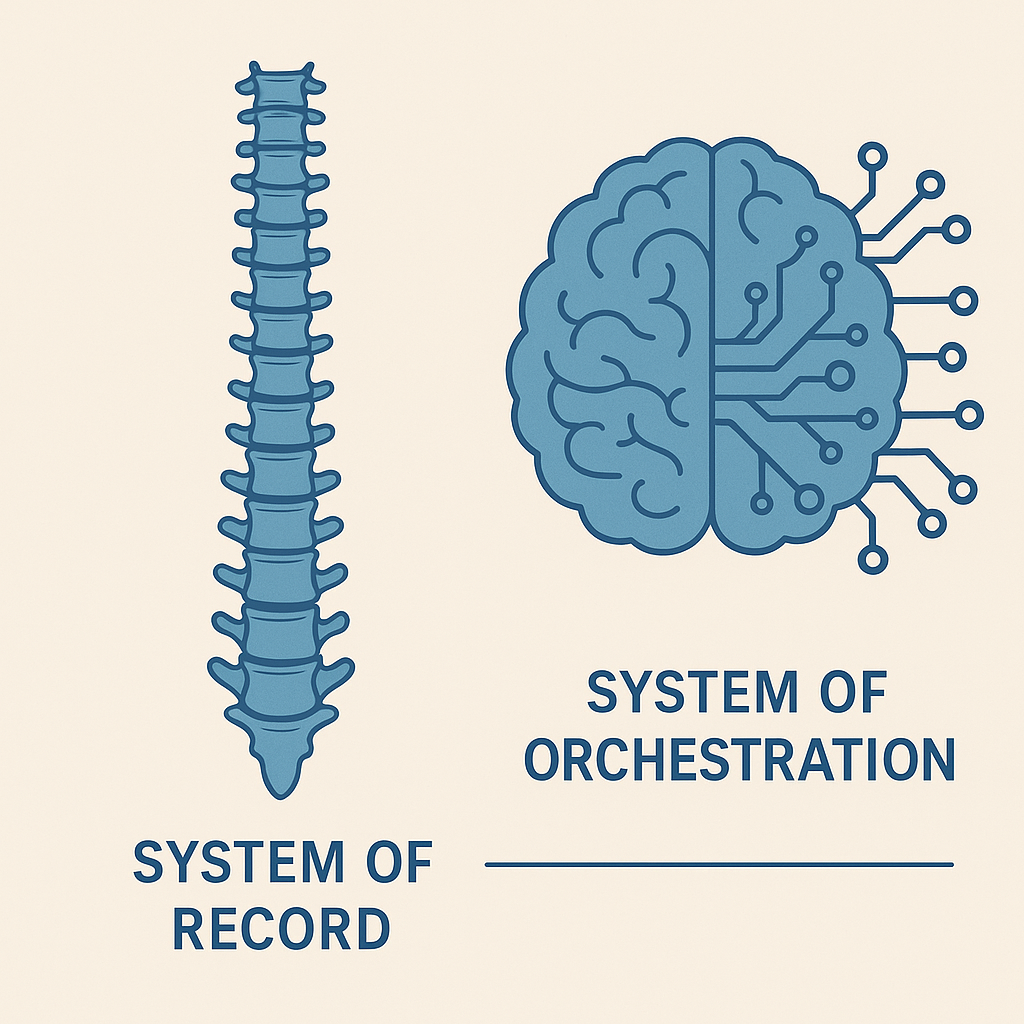
The UI might be shrinking. But AI still needs data, permissions, integrations and business logic underneath it. Perhaps we’ve been looking at the wrong layer….
Enterprise tech, AI and the gap between what vendors promise and what actually gets used.

The UI might be shrinking. But AI still needs data, permissions, integrations and business logic underneath it. Perhaps we’ve been looking at the wrong layer….

I was listening to The Diary of a CEO podcast this morning on my dog walk, where Mo Gawdat, former Chief Business Officer of Google…

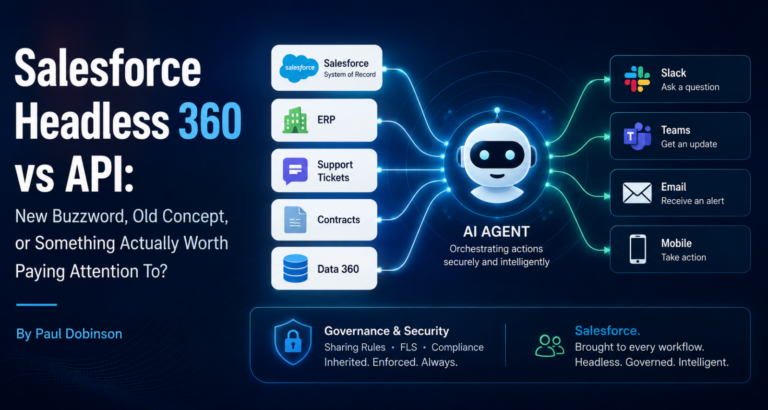
Salesforce’s new “Headless 360” announcement sounds, at first glance, like old integration technology wrapped in fresh AI branding. In some ways, it is. APIs, headless architectures, and orchestration layers have existed for years. But underneath the buzzword is a more meaningful shift: AI agents becoming the orchestration layer themselves.
This article explores how Headless 360 changes the conversation from simple system integration to something far more commercially important: governance, decision quality, process ownership, and the economics of automation at scale. Drawing on real-world experience from the MuleSoft and Salesforce ecosystem, it looks at why inherited trust, unified data, and agent evaluation frameworks may matter far more than the “headless” label itself.
Most importantly, it asks the question many businesses are only beginning to confront: not whether AI agents can act autonomously, but whether organisations can trust the decisions they make.


The agentic enterprise looks neat on stage. Inside real organisations, it’s messier. Here’s why integration debt, interface collapse, and “agentic debt” will define who wins in 2026.

Today is 23 February, 2026. On this day in 1997, Dolly the sheep was announced to the world. She had actually been created earlier at…

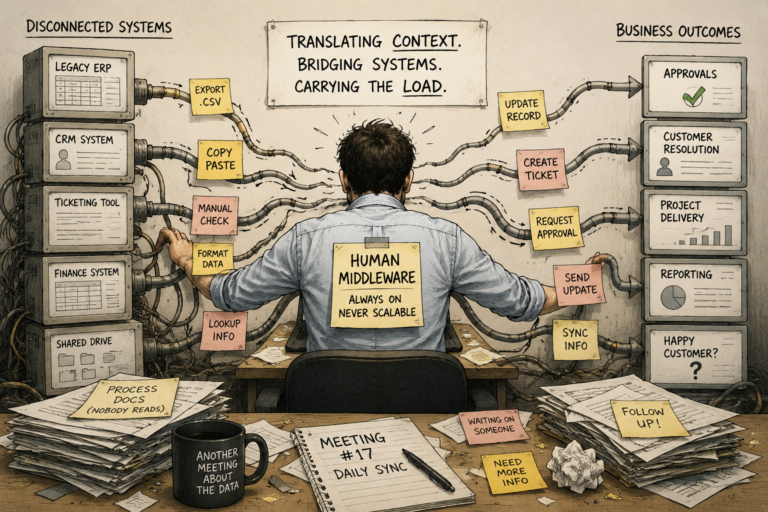
What my son’s question about my beard reminded me about first principles and bad process Yesterday my son asked me a question while I was…

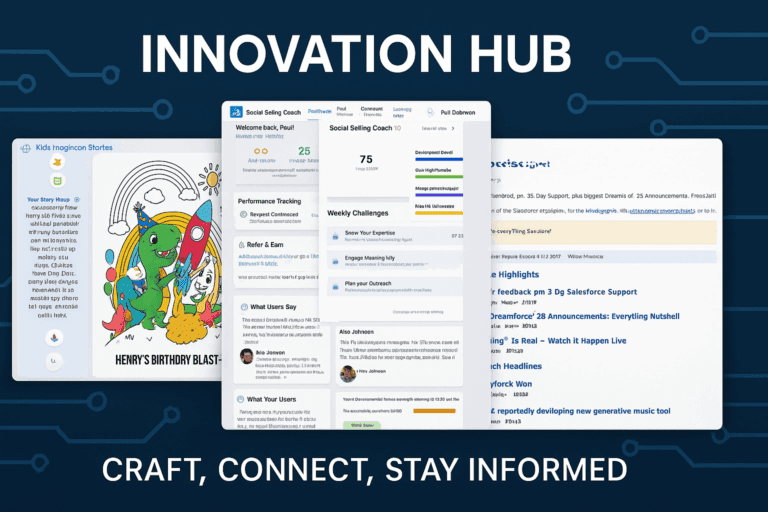
Can anyone build an app with AI? I decided to find out. From a creative kids’ story app for my son to a LinkedIn coaching tool and a daily Salesforce news digest, here’s what I learned about building real apps without being a developer, using Gemini, Vercel, Supabase, and a lot of curiosity.

Salesforce faces stock dips, layoffs, and doubts over Agentforce adoption, but CRM isn’t dead. The real challenge is exposed: dirty data, old orgs, and unclear strategies. Learn why clean data, orchestration, and a layered approach across customers, partners, and builders are the key to surviving the Age of AI.

Ageism is the one bias none of us can avoid. It shows up in restructures, where experience is traded out for cost savings. Now it’s being automated, with AI quietly rejecting older candidates before a human even sees their CV. The irony is that every leader applauding this ‘efficiency’ will one day face the same system themselves.

💡 GenAI has changed how people find answers. For small businesses, that’s a huge opportunity. You don’t need a million-dollar SEO budget, you need sharp thinking, clear writing, and the courage to answer questions better than anyone else. Even my own blog, with zero inbound links, is picking up organic traffic because AI tools surface useful content. If you find something valuable here, I’d be grateful if you shared or linked it, not just for SEO points, but as a personal favour. The more these ideas travel, the more they show up where people are really looking: inside AI answers.