Paul Dobinson
One bloke, two dogs, too many opinions.
Covering Tech, sport, and straightforward thinking from Sydney. From Salesforce to AI, and the human bit that makes it work.
Latest Writing
Newest posts first.
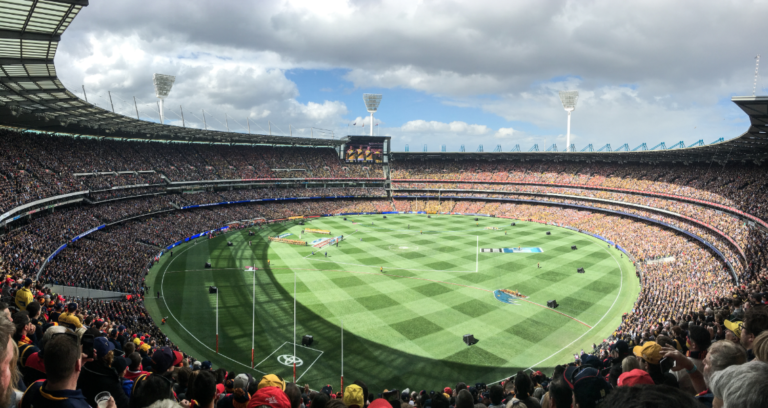
Why is Victoria paying $15 million for an NFL game?
Two A380s, 59 tonnes of equipment, 100,000 fans and a reported $10-15 million government commitment. I went down the rabbit hole of what it actually takes to bring an NFL game to Melbourne, and ended up thinking less about the football and more about market entry, customer acquisition, trust, and what happens after the game is over.
Salesforce Data 360: The Context Problem in Enterprise AI
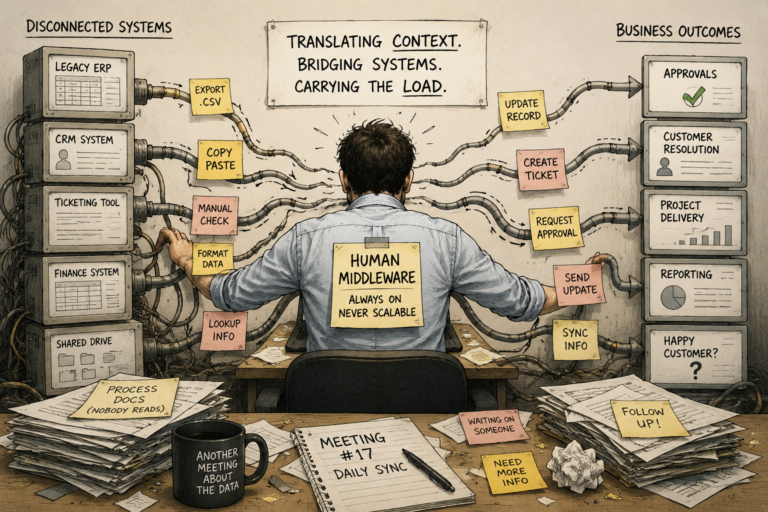
A year ago, I argued that Salesforce Data Cloud didn’t need to replace Snowflake or Databricks to matter. A year later, with Data 360 and Headless 360, I’m more interested in what happens when AI agents need to understand and act across increasingly distributed enterprise architectures. The real challenge may no longer be simply connecting systems, but giving agents enough trusted context to make the right decision.
The Commercial Envelope: What Happens When the Business Case Changes?
Migrating a legacy platform is hard to justify when the new one simply does the same job. But what happens when AI, MCP and Headless change both the cost of getting there and what you can do when you arrive?
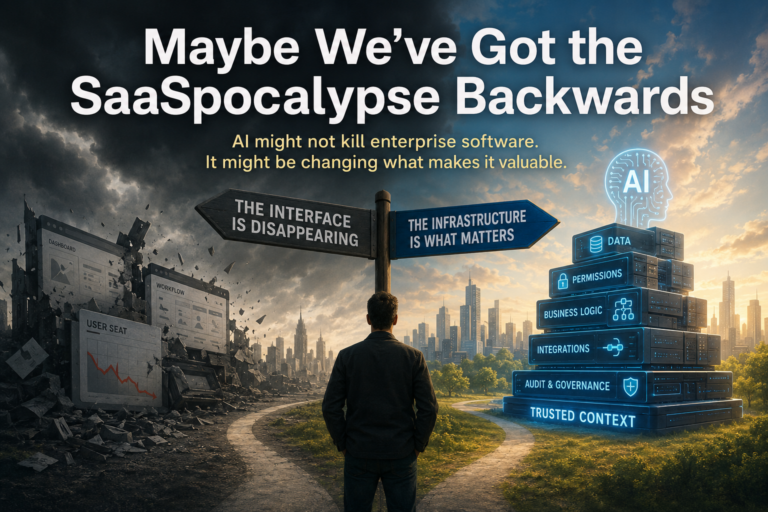
What If We’ve Got the SaaSpocalypse Backwards?
The UI might be shrinking. But AI still needs data, permissions, integrations and business logic underneath it. Perhaps we’ve been looking at the wrong layer….
From Two Suitcases to Ten Years
Photo: Manly, June 2016. Our first week in Australia. This Saturday marks exactly ten years since we landed in Australia. A few days earlier we’d…
Most Enterprise Complexity Exists Because Software Was Dumb
I was listening to The Diary of a CEO podcast this morning on my dog walk, where Mo Gawdat, former Chief Business Officer of Google…



Browse the Writing
Search by topic or explore the full archive.