
Why is Victoria paying $15 million for an NFL game?
Two A380s, 59 tonnes of equipment, 100,000 fans and a surprisingly interesting business case for bringing the NFL to Melbourne.
I’m ridiculously excited about Friday.
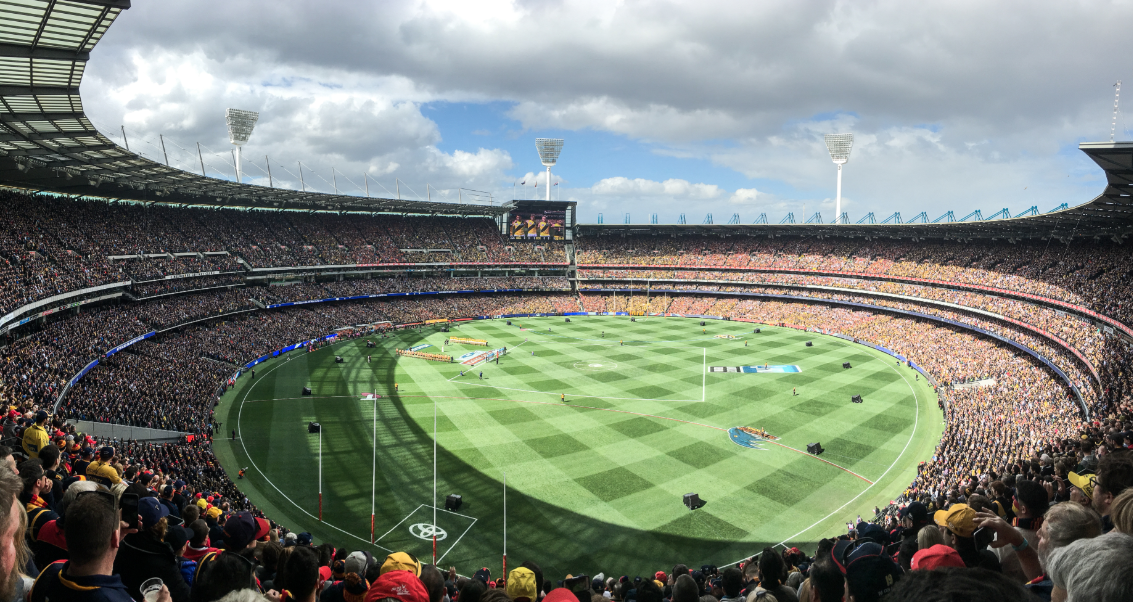
I’m flying down to Melbourne, I’ve got a very good excuse for a boys’ weekend, and I’m going to watch the San Francisco 49ers play the Los Angeles Rams at the MCG in front of close to 100,000 people.
I’ve followed the NFL for years, so the fact that I can get on a plane in Australia and a few hours later be sitting in the MCG watching an actual regular-season NFL game still feels slightly surreal.
Then I started wondering what it actually takes to make something like this happen.
That sent me down a fairly deep rabbit hole. I’ve probably spent far more time looking at the numbers than is sensible for someone who is supposed to be concentrating on enjoying his weekend, but once I started pulling the thread, I couldn’t really stop.
Because the more I looked, the less this seemed like a story about a football game and the more it looked like a story about market entry, customer acquisition and the practical problem of turning a very expensive event into something that creates value after everyone has gone home.
The logistics alone are pretty ridiculous.
Each team is bringing roughly 200 people, with the 49ers’ travelling party reported at around 200 and both teams operating huge support organisations behind them. The 49ers flew direct from San Francisco to Melbourne on a chartered Qantas aircraft, and the teams are moving around 32 tonnes of cargo by air. Another 27 tonnes of NFL equipment has gone by sea, with equipment then having to be moved back to the US for Week 2.
So we’re talking about roughly 59 tonnes of equipment being moved halfway around the world for a single game.
There are also more than 200 NFL staff involved in Melbourne, while the MCG has had to be adapted for an event it wasn’t originally designed to host.
When you look at it that way, “bringing an NFL game to Melbourne” sounds less like taking a sporting team overseas and more like temporarily relocating a small American city.
There is also the awkward environmental question. Two A380s, 59 tonnes of freight and hundreds of people travelling halfway around the world for a 60-minute game comes with a fairly hefty carbon footprint. I haven’t tried to put a precise number on it, but if we’re going to talk honestly about the economics, that cost belongs in the conversation too.
The cost
The figure being reported for Victoria’s agreement is somewhere around A$10 million to A$15 million per game. The precise commercial terms haven’t been disclosed publicly, so I’m not going to pretend that $15 million is a confirmed number.
But let’s use it as a working assumption.
Victoria’s latest Budget forecasts net debt of A$175.6 billion in 2026-27, so it’s entirely reasonable to look at a reported $15 million commitment and ask whether this is a sensible use of public money.
I don’t think you can answer that by looking at the $15 million on its own.
Victoria isn’t simply buying 100,000 seats at the MCG. It’s buying access to a global sporting property, an international broadcast audience, a tourism event and the chance to put Melbourne in front of people who might otherwise have very little reason to think about it.
The MCG should be packed. Fans from more than 35 countries have bought tickets and the Victorian Government says almost half of the crowd is expected to come from interstate or overseas. Hotel occupancy in the CBD is tracking 39 percentage points higher for the night before the game.
Those people don’t just buy a ticket. They fly in, stay somewhere, eat, drink, use transport and spend money in the city. Some will stay longer because they’ve travelled for the event.
That’s the obvious economic argument.
Then there is the media.
Kickoff is at 10:35am on Friday in Melbourne, which is 8:35pm on Thursday on the US East Coast. Thursday Night Football is already an established part of the NFL calendar in the US, so Melbourne fits neatly into an existing prime-time slot rather than asking American viewers to change their habits.
A game that looks like a slightly strange Friday morning event to us is therefore a Thursday-night NFL game to an American audience.
And Melbourne becomes part of what they’re watching.
The MCG. The crowd. The city. The novelty of an NFL game being played in Australia.
The Victorian Government isn’t just buying people through the turnstiles. It’s buying a media opportunity in which Melbourne gets to be part of the story.
That matters because destination marketing is notoriously difficult to measure. You can measure advertising impressions very easily. It’s much harder to work out how many people saw something, remembered it, talked about it and eventually decided to visit.
But that doesn’t mean the value isn’t there.
The market
Then there are the 8.8 million Australian fans the NFL says it now has.
I suspect that number covers a pretty broad definition of “fan”. It probably includes people who have been getting up at stupid o’clock to watch their team for years alongside people whose relationship with the NFL is basically the Super Bowl.
Again, that’s not necessarily a problem.
From the NFL’s perspective, it’s a huge pool of people who already have some level of awareness or interest.
The commercial question is what happens next.
Do some start following a particular team? Do they buy a jersey? Do they subscribe to the league’s streaming service? Do their kids start playing Flag Football? Do they travel to a future game? Do they start watching regularly rather than occasionally?
The NFL has said it wants another 50 million fans outside the United States, and Australia is clearly part of that international growth strategy. The league is also running a record nine international games across seven countries this season.
So the Melbourne game is not really the end of the process.
It’s the thing that gets the process moving.
Which brings me to the part of this week that I find more interesting than the ticket numbers.
The Rams are the home team and, through the NFL’s Global Markets Program, have commercial rights in Australia. That gives them the ability to develop sponsorships and commercial relationships here.
Yet they’re arriving roughly 24 hours before the game.
That’s not particularly surprising. Sean McVay is making a deliberate decision to minimise the impact of the 17-hour time difference and protect the team’s normal preparation. From a performance perspective, there is a very obvious sports-science argument for that approach. Sleep, circadian rhythms, recovery and routine all matter, particularly when you’re asking athletes to perform at an unfamiliar time of day on the other side of the world.
The 49ers have made a different calculation.
They arrived almost a week early. That gives them time to adjust to the timezone, but they’ve also used that time to get into Melbourne. They’ve done media, community events, fan activations and appearances. They have been to schools, engaged with local businesses and even turned up at Bunnings to help with a sausage sizzle for a kindergarten fundraiser.
I find that fascinating because neither strategy is obviously wrong.
The Rams are optimising for the football game.
The 49ers are using the trip to build the relationship with the market.
And those are very different objectives.
The 49ers don’t have the Australian commercial rights, but they can still build something that will matter if they ever get the opportunity to monetise the market later: familiarity.
That’s important when you’re trying to establish a brand in a place where people don’t have a long history with you.
A kid seeing an NFL player at school is different from seeing an advertisement for that player.
A family meeting players at a community event is different from another sponsored post appearing in their social feed.
You’re making the organisation more familiar. You’re giving people a chance to form an opinion about the people behind the logo.
That matters because people don’t normally choose an NFL team by comparing features and prices. They become attached to one. They build an identity around it. They become part of a community.
You can’t force that with media spend.
You can create the conditions for it.
And this is where the 49ers’ behaviour this week starts to make commercial sense.
They’re not just trying to get noticed.
They’re trying to become familiar.
The bit that gets messy
This is also why I’m slightly sceptical when I see the $15 million figure treated as though it is the whole investment.
It isn’t.
The government agreement is one cost. Then you’ve got flights, freight, accommodation, stadium modifications, security, medical support, broadcasting, marketing, staff, infrastructure and all the other costs involved in bringing an operation of this size to the other side of the world.
Somebody pays for all of that.
Then look at where the benefits land.
Hotels benefit. Restaurants benefit. Airlines benefit. Transport operators benefit. Sponsors get access to a new audience. The NFL gets exposure and fan acquisition. The Rams get the commercial rights in Australia. The 49ers get the chance to build a fan base here.
The Victorian Government gets tourism and international exposure.
So this isn’t really one clean ROI calculation.
It’s a value chain.
Different organisations are paying different costs and capturing different parts of the return.
That distinction matters because the government’s return isn’t necessarily the NFL’s return, and the NFL’s return isn’t necessarily the teams’ return.
You can have a perfectly rational investment for one participant that looks completely different from the economics for another.
There is a useful comparison in Munich.
When the NFL played its first regular-season game there in 2022, an economic impact study commissioned by the league estimated that it generated €70.2 million of economic impact, including €32.2 million of direct spending.
I’m not going to take that number and claim Melbourne will do the same. Munich isn’t Melbourne, and economic impact isn’t government profit.
But it does demonstrate the point.
The economic activity around a major NFL game can be considerably bigger than the game itself.
What happens after Friday?
This is probably the part I’d be most interested in if I were responsible for the investment.
The packed MCG is important, obviously, but it’s also the easy number.
I’d want to know what happens afterwards.
Do NFL subscriptions grow in Australia?
Does merchandise sales increase?
Does Flag Football participation move?
Do sponsors renew or increase their investment?
Does the next game sell faster?
Do more Australians move from being casual NFL fans to supporting a particular team?
Does Melbourne become a more attractive destination for other international sporting events?
That’s the real test.
The game is the intervention. The behaviour afterwards tells you whether it worked.
And that is where this starts to look a lot like any other growth strategy.
You put something into a market.
You measure the response.
You learn what worked.
You change what didn’t.
Then you decide whether to scale it.
The NFL is clearly interested in scaling. Australia is being treated as a strategic market, and the league has already said it wants the Melbourne game to become an annual fixture.
So I started this wondering whether spending a reported $10 million to $15 million on an NFL game made much sense for a state carrying $175 billion of debt.
I’m still not sure.
We don’t have enough of the numbers to prove the return.
But I can see the logic a lot more clearly now.
It’s not really the cost of putting a football game on.
It’s the cost of testing whether there is a market here worth building.
And as a fan, I’m very glad someone with a considerably better handle on the numbers than me thinks the experiment is worth running.
I’m flying to Melbourne, I’m having a boys’ weekend, and I’m bloody excited to watch the 49ers and Rams at the MCG.
I’ll be in the stands enjoying the football.
I’ll just also be wondering what happens after Friday.