Views on the SaaSpocalypse: Lessons from a Sheep Called Dolly
Today is 23 February, 2026.
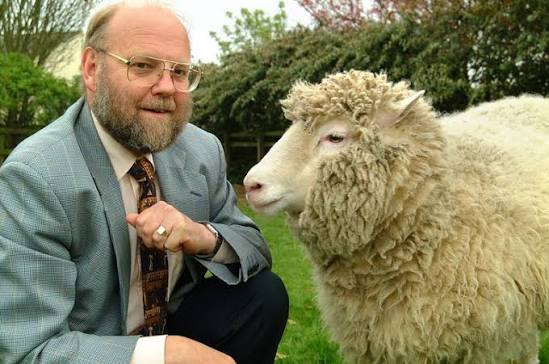
On this day in 1997, Dolly the sheep was announced to the world.
She had actually been created earlier at the Roslin Institute outside Edinburgh, but this was the moment it became public. The press conference. The headlines. The sudden certainty that something irreversible had just happened.
Dolly was the first mammal cloned from an adult cell. A real, live animal, not a theory.
The response was both immediate and dramatic. Ethical panic. Political noise. Confident predictions about cloned humans and a future spiralling out of control. It was framed as a line being crossed rather than a scientific milestone.
And then, in practice…very little happened.
Dolly lived a fairly ordinary sheep life. Cloning found narrow, careful use cases. Society didn’t collapse. Work didn’t end. The technology settled into the background and became another tool, not a civilisation reset button.
I’m raising Dolly today for three reasons.
First, I like anniversaries. They force reflection rather than reaction.
Second, I can’t quite believe it was nearly 30 years ago. Time truly does pass quickly.
Third, because it feels familiar.
We’re in the middle of another wave of certainty. This time it’s AI, and more specifically the claim that AI will kill SaaS. The so-called “SaaSpocalypse”. The idea that traditional software platforms are about to disappear, quickly and decisively.
That belief isn’t confined to podcasts and think pieces. It’s visible in market behaviour. Software valuations have taken a hit as investors attempt to reprice what growth, margins, and pricing power might look like in an AI-heavy future. That matters, but it’s not the same thing as customers abandoning platforms or enterprises ripping out core systems. Markets are reacting to uncertainty about economics, not declaring that SaaS has suddenly stopped being useful.
To be clear, this article isn’t about what AI will do to the world. That conversation is already everywhere, and there are many more qualified people than me driving it. This article is about the short-term impact on SaaS software, and myth-busting the increasingly confident assumption that we’re watching its end. Those two ideas are often blurred together, and that’s where the analysis usually goes wrong.
The argument usually runs like this: AI can now write code, orchestrate workflows, and act through agents. If that’s true, why would anyone need large SaaS platforms anymore?
It sounds convincing until you look at how enterprise software actually works.
For years, organisations have been technically capable of building their own CRM, ITSM, HR, or finance systems. Open source has been viable for a long time. Cloud infrastructure from providers like Amazon Web Services has been readily available. None of this is new.
And yet, most organisations didn’t build their own.
Not because they lacked smart people. Because code was never the hardest part.
The hard parts were everything around it. Data governance. Security. Integration. Regulatory compliance. Ongoing maintenance. The slow, expensive accumulation of technical debt. Keeping critical systems running while the business grows, restructures, acquires, and gets audited.
SaaS platforms don’t just package features. They package responsibility. They standardise outcomes and absorb risk. They take messy, failure-prone problems and make them someone else’s job.
That isn’t going to change.
This is easiest to see when you look at where SaaS actually sits today. Platforms like Salesforce in CRM/Service, ServiceNow in IT and operations, and SAP in finance and supply chain aren’t just user interfaces waiting to be replaced by a chat window. They encode data models, security controls, regulatory compliance, integrations, and years of process decisions across global organisations.
Replacing that isn’t a matter of generating better code or a smarter agent. It means unwinding how a business actually runs, and that kind of change happens slowly, deliberately, and rarely in response to headlines.
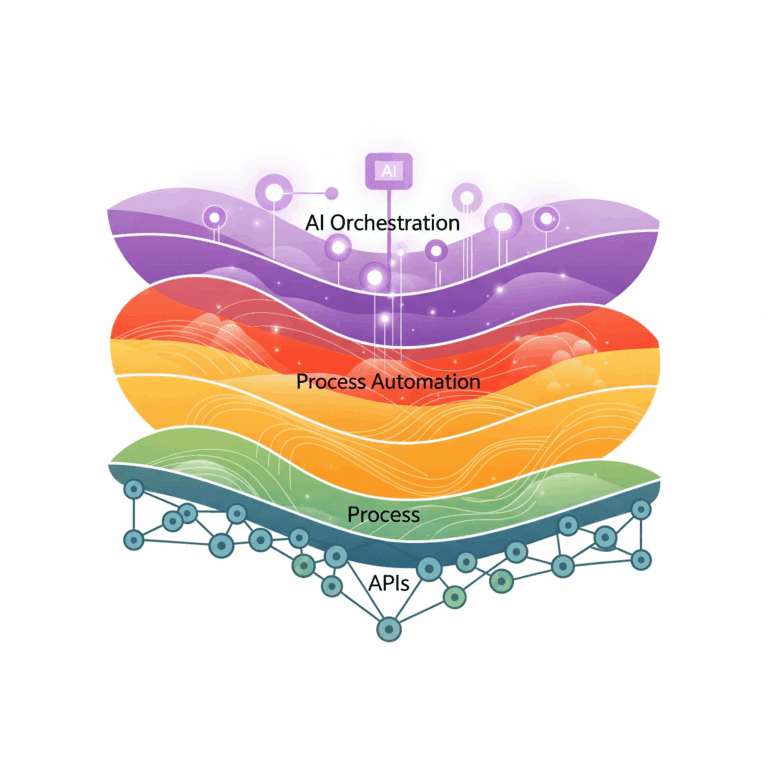
AI doesn’t remove these platforms. It layers over them.
It sits on top of existing data models, workflows, and controls rather than replacing them wholesale. In practice, that means AI becomes a new way of interacting with systems like Salesforce, ServiceNow, or SAP, not a reason to rip them out. The hard parts still live underneath: data quality, permissions, governance, integration, and accountability. AI can reason and act, but it can’t invent trusted data, resolve conflicting records, or decide who is allowed to see what. At scale, those foundations matter more than the interface sitting on top of them.
Ignoring this layer doesn’t just limit AI, it introduces risk. Without clean, governed data and well-defined processes underneath, AI amplifies inconsistency rather than insight. It makes mistakes faster, spreads them further, and does so with confidence. That’s not transformation, that’s acceleration without control. Organisations that care about reliability, compliance, and repeatable outcomes don’t treat structure as overhead. They treat it as the basis of excellence.
That’s where SaaS earns its keep.
SaaS platforms normalise data, enforce controls, and encode how work is meant to happen. They make behaviour predictable across teams, regions, and systems. In that sense, they aren’t an obstacle to AI. They’re the rocket fuel. AI moves faster and further when it’s anchored to systems designed for scale, accountability, and operational discipline.
The real pressure on SaaS right now isn’t existential. It’s economic.
The shift from per-seat licensing, where pricing could be approximated by counting chairs, to consumption-based models is genuinely difficult. Forecasting becomes harder because usage fluctuates. Budgets lose predictability. Spend moves from fixed to variable, often without clean leading indicators. Vendors take on more risk, but so do customers, and finance teams are left trying to explain volatile software costs in a world that still expects tight forecasts and clean variance reports.
The tension comes from budgeting and forecasting, not from SaaS suddenly becoming less useful.
If anything, this reflects a market maturing. Pricing tied to usage and outcomes forces clearer conversations about value. It favours platforms that are deeply embedded in business processes rather than lightly licensed and rarely used. That tends to make systems harder to replace, not easier.
Which brings us back to Dolly.
A real breakthrough triggered fear well beyond its immediate impact. Confident predictions were made. Lines were supposedly crossed. And then reality turned out to be slower, messier, and far more practical than the commentary suggested.
AI will change software. Some companies will struggle. Some categories will be reshaped.
But the idea that SaaS is about to end feels less like insight and more like recycled panic.
History suggests these moments rarely end in extinction. They end in adjustment.
Dolly didn’t end biology. She forced it to grow up a bit.
AI is doing the same to SaaS.