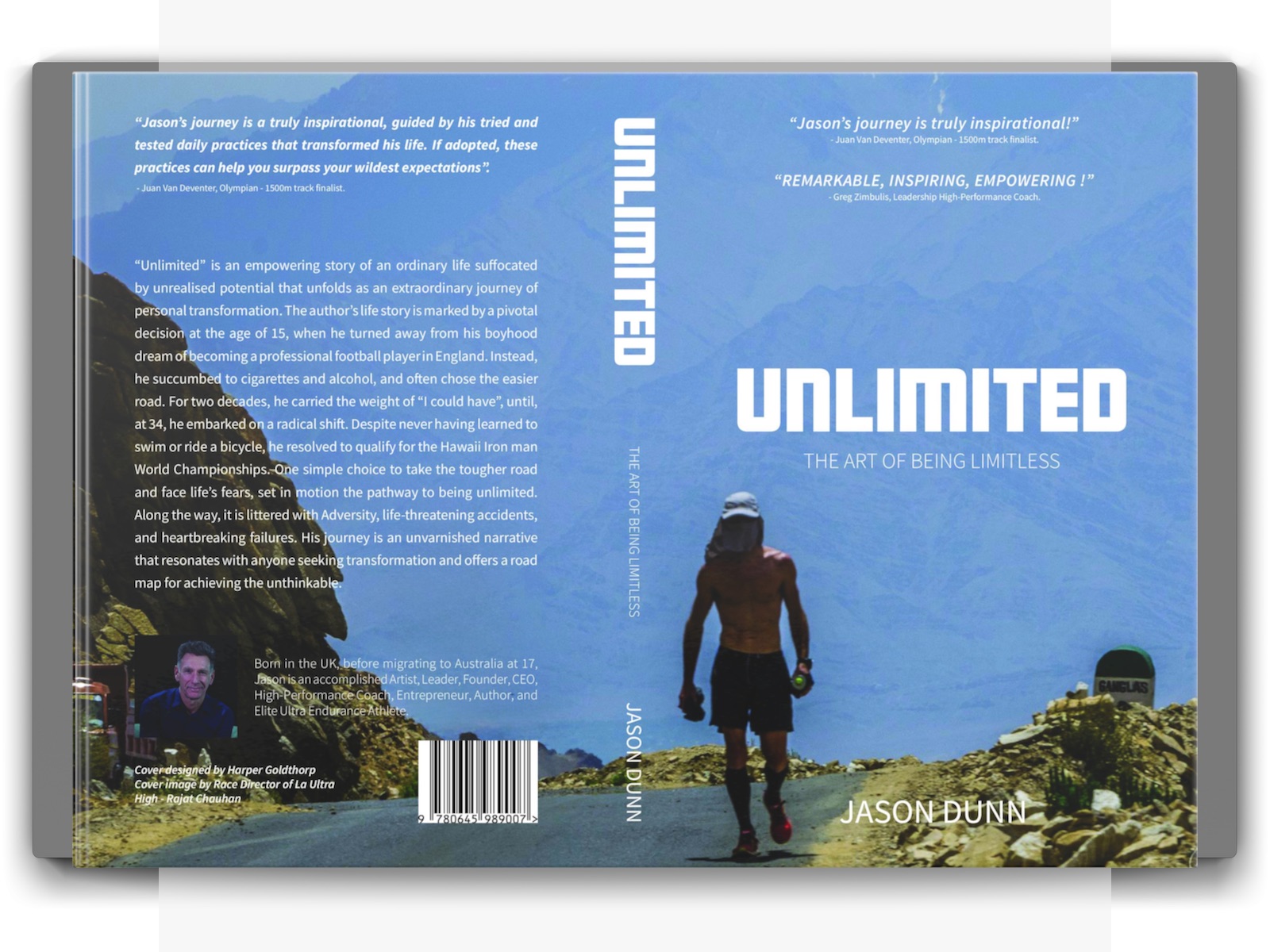
Unlimited by Jason Dunn
Unlimited is the story of a regular Aussie bloke who pushed himself further than he ever thought possible and ended up representing Australia at the highest level of endurance sport.
That line alone could sound like hype. The book isn’t.
What makes Unlimited work is that Dunn doesn’t present himself as gifted, destined, or special. He presents himself as someone who stopped quitting early. When he committed to qualifying for the Hawaii Ironman, he couldn’t swim well and barely knew how to ride a bike. He wasn’t building on a lifelong base. He was starting from behind, learning skills late, and paying for it physically.
The endurance was always there, he just didn’t know it until he pressed on it hard enough.
The endurance side of this book resonated strongly with me. Not because I’m anywhere near the distances or intensity Dunn talks about, but because the emotions are familiar. The doubt. The bargaining. The quiet voice that says stopping would be reasonable right now. Some of the runs he describes are genuinely insane, but the internal experience feels recognisable if you’ve ever pushed yourself physically for longer than you planned.
Crucially, this isn’t a highlights reel. Dunn spends real time on failure. Dropping out. Not finishing. Going backwards. Injuries that derail months of work. Moments where discipline cracks and confidence wobbles. Instead of hiding those chapters, he treats them as essential. Failure isn’t something to recover from and forget. It’s something to use, to learn from, and to carry forward.
One of the book’s strongest messages is that setbacks don’t disqualify you. They shape you. Dunn keeps coming back to the idea that resilience is built by staying in the work after disappointment, not by avoiding it altogether. That feels far more useful than the usual success narratives.
After achieving his goal of competing at the Hawaii Ironman, the story doesn’t end. That’s one of the better twists. Rather than settling, Dunn pivots again and starts pushing himself in new ways through ultra endurance running, and this is ultra in the true sense of the word. Longer, lonelier, and often more brutal than triathlon. The distances are hard to comprehend, but the point isn’t the numbers. It’s the willingness to keep choosing discomfort once the big goal box has already been ticked.
There is a framework running through the book, but it’s deliberately simple. Commit properly. Show up daily. Accept discomfort as part of progress. Learn the difference between pain that causes damage and pain that causes growth. Reflect, adjust, and keep going. It works because it has to survive bad days, injury, stress, and self doubt.
Dunn also connects endurance sport to business without forcing the analogy. He’s a successful businessman and runs a business built around these ideas, not as slogans, but as practice. Discipline compounds. Consistency matters more than motivation. Stress and anxiety don’t disappear, but they can be understood, managed, and used rather than avoided. Failure becomes feedback rather than identity.
The Audible version deserves mention. It isn’t polished. It sounds like someone thinking out loud at times. That roughness suits the message. This isn’t a rehearsed performance. It feels lived.
Unlimited won’t turn you into an Ironman. It doesn’t try to. In fact, some of the stories about nearly drowning or getting kicked in the head might do the exact opposite of inspiring. What the book does do is challenge the quiet assumptions many of us carry about our limits, especially at work, in leadership, and in mid career life. It asks whether you’ve ever really tested yourself, or whether you’ve been stopping early and calling it sensible.
That question sticks.
My top three takeaways:
- Most limits are negotiated, not enforced
We often stop because discomfort feels like a warning, when it’s usually just unfamiliar territory. - Failure is part of the training, not a detour
Dropping out, getting injured, or falling short doesn’t disqualify you. It builds the resilience you can’t get any other way. - Clarity follows commitment
Dunn didn’t wait to feel ready. He committed, then figured things out under pressure. That applies as much to careers and leadership as it does to endurance sport.
You don’t need to want to run ultras or race Ironman to get value from this book. You just need to be honest about where you might be backing off early.
That’s perhaps the uncomfortable part. But it also the useful one.