Redefining Intelligence: How Behavioural Science & AI Shape Meaningful Business Growth.
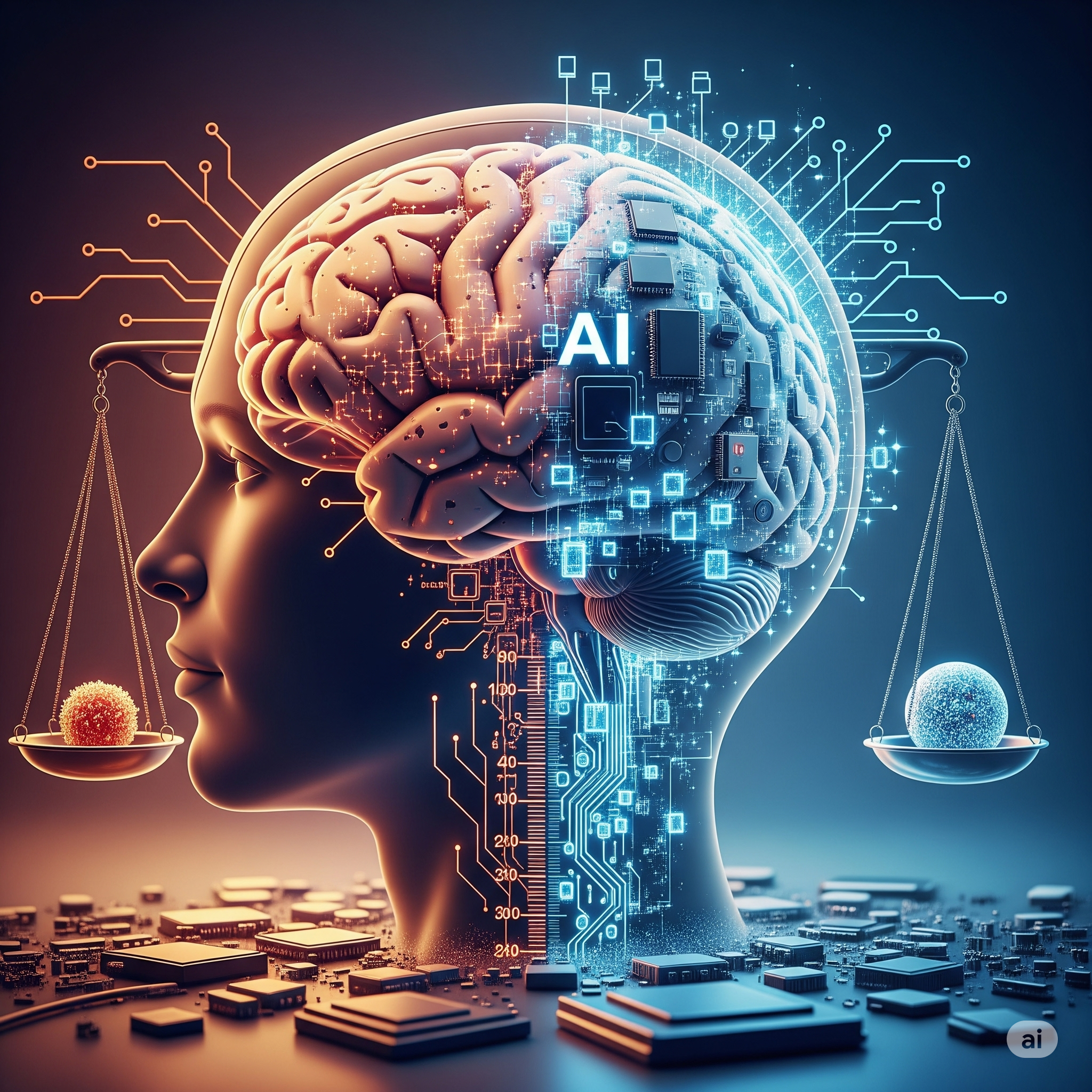
We love to talk about intelligence: Artificial Intelligence, Emotional Intelligence, General Intelligence. We rank it, measure it, worship it. We assume it’s the pinnacle of evolution, the ultimate trait to strive for, in ourselves and in our machines.
But what is intelligence, really?
Most definitions circle around the same idea: the ability to acquire and apply knowledge and skills to solve problems and adapt to your environment. Psychologist David Wechsler defined it as acting purposefully, thinking rationally, and dealing effectively with your surroundings. AI researchers like Legg and Hutter define it as an agent’s ability to achieve goals across a wide range of environments.
By those measures, AI today is remarkable. Yet, it fundamentally lacks understanding, self-awareness, and agency. It doesn’t choose goals for itself or feel; it just processes patterns at breathtaking scale and speed. A very useful tool, yes. But an intelligence in the way we typically conceive of it? Perhaps not yet.
But here’s the crucial question: Does it even matter?
Does AI’s ‘Intelligence’ Matter?
Does it matter if AI is truly intelligent or just a clever mimic, as long as it helps us write better emails, diagnose disease earlier, optimise supply chains, or create art that resonates?
In truth, it only matters when it does:
- When it influences how we see ourselves.
- When it shapes decisions about power, responsibility, or ethics.
- When it changes what we value and prioritise as humans and organisations.
The Human Lens Problem
We assume we are the benchmark of intelligence, the apex. But are we?
An octopus can unscrew jars and navigate mazes without a spine or centralised brain.
Fungi connect forests into vast information networks, distributing nutrients and signals across kilometres.
Birds migrate continents guided by geomagnetic fields we can’t even perceive.
This narrow focus isn’t just an academic oversight; it limits our ability to learn, to innovate, and to truly understand the diverse mechanisms of thriving that exist in the world, often leading us to overlook solutions simply because they don’t fit our preconceived notions.
If intelligence is about thriving in your environment, then perhaps humans are intelligent. And so are the octopus, fungi, and migratory birds. Each perfectly adapted to its context.
Behavioural Science Perspective
This matters because what we measure shapes what we value. And what we value drives how we act.
This phenomenon is often captured by Goodhart’s Law: “When a measure becomes a target, it ceases to be a good measure.” If we fixate solely on a metric, it loses its ability to truly reflect the underlying reality we intended to capture.
Psychologists Edward Deci and Richard Ryan remind us through Self-Determination Theory that autonomy, competence, and relatedness are core human needs. When we fail to measure or prioritise these, our intelligence, whether applied in business strategy or personal development, can lead us astray, chasing external markers of success that don’t genuinely fulfil us or our teams.
The Motivation Trap
In business and life, we often chase the wrong goals:
- Seeking to appear intelligent rather than being curious.
- Optimising productivity instead of creating value.
- Focusing on outputs, for example, the number of reports written, over outcomes, like improved decisions that drive real business results.
We treat intelligence as a competition, forgetting it’s a tool, not the prize. It’s our use of it: to create, to connect, to build better worlds, that matters.
So… Does Intelligence Matter?
Does it matter if AI is intelligent, or if we are the apex of intelligence?
Yes, and no.
It matters when we let our definitions of intelligence limit what we value.
It matters when our measurements shape hollow goals instead of meaningful ones.
It matters when we mistake mimicry for understanding, or when we build tools without questioning how they shape us in return.
But it doesn’t matter in the abstract. Intelligence, artificial or human, is not an end in itself. It is only as valuable as what we do with it.
When it helps us thrive with purpose, create meaning, solve real problems, and build better futures, then it matters deeply. If it becomes just another metric to chase or a badge of superiority, then it’s little more than noise.
Ultimately, intelligence matters when it serves life, growth, and meaning. That is what makes it truly intelligent.